Commercial battery energy storage systems last as long as they can safely and economically deliver the power and usable energy required by the project. Calendar aging, cycling, operating temperature and maintenance all affect that period. A planning horizon, a cell cycle rating and a product warranty are different measures and should be assessed separately. Usable capacity generally declines through calendar aging and cycling, while component faults can affect availability independently. State of health (SOH) helps track changes in battery condition. The key question is how long the system can maintain the usable energy capacity and discharge performance your facility requires.
Modern HiTHIUM commercial and industrial battery energy storage systems use lithium iron phosphate (LFP) technology and liquid-cooled configurations for stationary applications. Understanding how battery aging works helps businesses estimate their energy storage system's service life, plan maintenance, and protect long-term investment returns.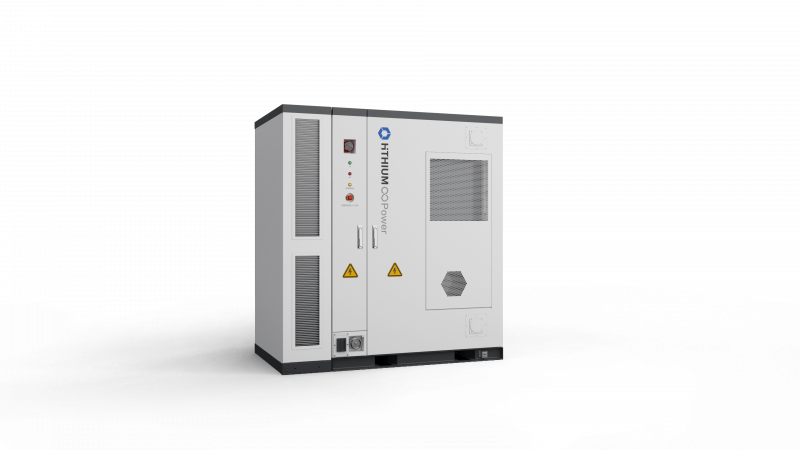
Evaluate the proposed operating period against both calendar-aging and cycling data. For example, a financial model may examine a 15-year project, but that analysis period does not establish a 15-year equipment warranty or guaranteed battery life. Some newer energy storage cells are designed for longer operating periods. However, a cell's stated design life does not automatically establish the service life of the complete system, which also includes power electronics, thermal management, controls, and other components.
Battery Technology | Typical Planning Considerations | Commercial Applications |
Lithium Iron Phosphate (LFP) | Assess calendar aging, cycle throughput and the required remaining capacity using product-specific data. | Peak shaving, solar energy storage, load shifting, and industrial energy management. |
Nickel Manganese Cobalt (NMC) | Calendar aging, operating temperature, and cycling conditions must be assessed against product-specific life data. | Applications where energy density and installation constraints are important. |
Lead-Acid | Generally requires closer attention to depth of discharge, cycling frequency, maintenance, and replacement intervals. | Standby power and selected industrial backup applications. |
Vanadium Redox Flow Battery | Potentially suitable for long-duration applications, with electrolyte life and stack maintenance evaluated separately. | Long-duration storage and applications requiring repeated energy cycling. |
These are technology-level considerations rather than directly comparable product warranties. Battery models within the same chemistry can have substantially different performance characteristics.
Calendar life describes how battery performance changes over time, even when the battery is not regularly charged or discharged. Temperature, average state of charge, and cell chemistry influence this aging process. Cycle life describes the number of charge-discharge cycles completed before reaching a specified capacity-retention threshold under defined test conditions. A cycle-life specification is meaningful only with its test temperature, charge and discharge rate, depth of discharge and remaining-capacity threshold. Calendar aging occurs at the same time. Dividing a laboratory cycle rating by cycles per year therefore does not predict the service life of an installed system.
This distinction matters when comparing a battery used for occasional emergency backup with one performing daily electricity arbitrage.
Two facilities can install batteries with the same rated capacity and still experience different rates of capacity degradation. Their operating schedules, installation environments, and charging strategies may be substantially different.
Battery chemistry influences thermal stability, energy density, cycle performance, and operating characteristics. Lithium iron phosphate batteries are widely used in stationary energy storage because their chemistry offers favorable thermal stability and cycling characteristics for many commercial applications. However, LFP chemistry alone does not establish a specific 15-year or 20-year lifespan. Electrode design, electrolyte formulation, manufacturing consistency, operating conditions, and thermal management also affect long-term performance.
HiTHIUM's energy storage cell portfolio includes ESS Cell 314Ah with a published nominal rating of at least 13,000 cycles and ∞Cell 1175Ah with at least 11,000 cycles. These are cell-level ratings. They do not establish an identical cycle allowance, operating lifespan or warranty for a complete C&I system.
Temperature is an important factor in lithium-ion battery degradation. Sustained exposure to elevated temperatures can accelerate unwanted chemical reactions inside battery cells. Battery aging models should account for operating temperature and state of charge, as well as cycling history, rather than extrapolating service life from a cycle number alone. A battery installed in an industrial environment with high ambient temperatures may therefore experience different aging behavior from an otherwise identical battery operating in a controlled environment.
Thermal management systems help keep cells within the specified operating temperature range. Liquid cooling circulates a coolant through a controlled thermal management system, supporting heat transfer from battery modules during operation. HiTHIUM's commercial and industrial energy storage solutions incorporate liquid-cooled battery storage configurations designed to support thermal management and stable operation.
Depth of discharge (DoD) describes how much of the battery's available capacity is used during a discharge cycle. For example, discharging 400 kWh from a fully charged battery with a 500 kWh battery-side reference capacity represents 80% DoD on that defined reference. The manufacturer's SOC and DoD definitions take precedence, particularly when usable capacity excludes part of the nominal energy window. Repeated deep cycling can affect degradation differently from shallower cycling. However, the precise relationship depends on the cell design, operating temperature, charge and discharge rates, and the tested DoD range.
Businesses should use manufacturer-provided cycle-life curves instead of assuming that all LFP batteries last a fixed number of cycles at every depth of discharge.
State of charge (SOC) indicates the percentage of available battery capacity remaining. Maintaining a battery at a high SOC for extended periods can contribute to calendar aging, particularly under elevated temperatures. Very low SOC operation can also create operational limitations or protection events. A suitable energy management system (EMS) coordinates the battery's charging and discharging schedule according to electricity prices, facility demand, and the manufacturer's operating limits.
The objective is not to impose one universal SOC range on every system. It is to operate within the validated conditions established for the selected battery product.
Commercial battery systems include more than battery cells. Their operating life also depends on equipment such as:
· Power conversion systems (PCS)
· Battery management systems (BMS)
· Cooling pumps and heat exchangers
· Electrical connections and protection equipment
· Fire detection and suppression systems
· Monitoring sensors and communications equipment
Dust, moisture, corrosion, poor ventilation, and neglected maintenance can increase the likelihood of component faults. Preventive maintenance should follow the approved equipment service procedures, and high-voltage inspection or repair should be performed by qualified personnel.
Businesses can develop a preliminary battery lifetime estimate using technical datasheets, expected daily operation, and capacity retention requirements. The following process also helps connect battery longevity with commercial energy storage investment planning.
Before calculating battery life, obtain the following information:
· Nominal and usable battery capacity in kWh
· Cycle-life rating and associated test conditions
· Capacity retention at the specified cycle-life endpoint
· Operating temperature range
· Permitted depth of discharge
· Expected charging and discharging schedule
· Calendar aging information
· Product warranty and energy throughput limitations
For an existing installation, obtain energy throughput records, capacity test results, temperature trends, and BMS operating data. These records are more useful than relying on the installation date alone.
Equivalent full cycles (EFC) convert partial battery cycling into the equivalent number of full discharges.
For this operating comparison, Annual Equivalent Full Cycles = Annual Discharged Energy / Reference Usable Battery Capacity. Use the same battery-side measurement boundary for both values. A manufacturer may define contractual cycle or throughput limits using a different reference, such as nominal capacity; follow that definition when assessing warranty coverage.
Consider a hypothetical industrial facility with:
· Usable battery capacity: 500 kWh
· Average discharged energy: 400 kWh per operating day
· Operating frequency: 300 days per year
Annual Discharged Energy = 400 × 300 = 120,000 kWh
Annual EFC = 120,000 / 500 = 240 Cycles
The system completes approximately 240 equivalent full cycles per year, using its initial usable capacity as the reference. This calculation measures energy throughput. It does not capture every aspect of cycle aging, including cycling depth distribution, C-rate, or temperature.
Compare the expected annual energy throughput with validated battery life data for the proposed temperature, state-of-charge range and discharge pattern. Use the relevant degradation model or manufacturer curve to evaluate capacity across the project years. Include calendar aging even when the battery is used only occasionally. Check the warranty separately for its duration, remaining-capacity commitment and any throughput limit. The earliest applicable limit may determine the contractual coverage, while the technical life of the equipment depends on its condition and ability to serve the load.
Battery end of life (EOL) is commonly defined using a capacity retention threshold, although the applicable threshold varies by product and project. For example, assume the facility considers 80% of initial usable battery capacity its minimum acceptable level.
Capacity Retention | Remaining Usable Capacity | Interpretation |
100% | 500 kWh | Initial reference capacity |
95% | 475 kWh | 25 kWh below the initial reference |
90% | 450 kWh | 50 kWh below the initial reference |
85% | 425 kWh | 75 kWh below the initial reference |
80% | 400 kWh | 100 kWh below the initial reference |
These figures show what different capacity retention levels mean for a 500 kWh battery. They are not a measured degradation curve or a forecast by year. If the facility requires 450 kWh for its daily operating schedule, capacity loss to 400 kWh could reduce the battery's ability to complete the intended energy shifting task. At that point, the business may need to adjust dispatch schedules, consider capacity augmentation, or reassess its operating strategy.
A battery reaching 80% capacity does not necessarily stop functioning. Its continued suitability depends on safety, performance, warranty conditions, and the energy requirements of the application.
Battery longevity matters because a storage system must generate sufficient financial value during its useful operating period.
Consider an illustrative commercial energy storage investment:
· Initial investment: $350,000
· First-year net savings: $43,700
· Simple payback period: approximately 8.0 years
· Financial modeling period: 15 years
Simple Payback Period = Initial Investment / Annual Net Savings
Simple Payback = $350,000 / $43,700 = 8.01 years
If savings remained constant, a 15-year operating period would provide approximately seven years after simple payback. However, this simplified comparison does not account for battery degradation, equipment replacement, financing, discount rates, or changing electricity tariffs. A complete commercial battery storage lifecycle cost analysis should model the cash flow for each operating year and determine whether the battery can continue meeting the facility's energy requirements.
Battery system life can be managed more effectively when monitoring and maintenance are included in the project plan from the beginning.
A practical plan should identify:
· Commissioning measurements that establish baseline usable capacity and system efficiency.
· Routine monitoring of battery temperature, SOC, alarms, and energy throughput.
· Scheduled inspection of cooling and electrical systems according to manufacturer requirements.
· Periodic performance testing using an approved test procedure.
· Thresholds for investigating abnormal capacity loss or declining efficiency.
· Conditions that may require module replacement, system augmentation, or other approved corrective action.
The replacement schedule should be based on actual operating condition and component service requirements rather than treating the entire BESS as a single component with one fixed expiration date.
The ∞Power 1022kWh cabinet uses 1175Ah LFP cells with liquid cooling. Its cell chemistry and thermal management are relevant to long-term performance, but a complete installation also depends on the PCS, cooling equipment, monitoring and maintenance. The 261kWh and 418kWh platforms use 314Ah LFP cells. Buyers should obtain the degradation and warranty data for the exact proposed cabinet and PCS arrangement, rather than applying a standalone cell specification to the complete project.
Review the HiTHIUM C&I product range for the available configurations and request model-specific life and maintenance information with the quotation.
Extending battery service life involves operating the system within its validated limits, avoiding unnecessary stress, and identifying performance changes before they disrupt facility operations.
Keep the battery thermal management system operating according to manufacturer requirements. Inspect coolant circuits, pumps, sensors, and applicable filtration or heat exchange equipment at the prescribed intervals. Use BMS temperature records to identify persistent high-temperature operation or abnormal temperature differences between battery modules. Temperature readings should be assessed against the actual product limits rather than a single generic target applied to all battery technologies.
A battery used for daily peak shaving should discharge when doing so creates measurable value. Repeated cycling without corresponding economic benefit increases energy throughput without necessarily improving project returns. Coordinate the EMS strategy with electricity tariffs, demand forecasts, and expected solar generation. Where operationally appropriate, reduce unnecessary high-power charging or deep cycling that is not required for the site's energy management objectives.
State of health is generally expressed as a percentage of a defined reference battery condition.
For capacity-based assessment:
Capacity SOH (%) = Measured Usable Capacity / Reference Usable Capacity × 100
If a battery originally delivered 500 kWh under a standardized test and later delivers 460 kWh under comparable conditions:
SOH = (460 / 500) × 100 = 92%
The battery retains 92% of its reference usable capacity under those measurement conditions. Because BMS-estimated SOH can differ from independently measured usable capacity, businesses should document the measurement method and maintain consistent testing conditions when comparing results.
Battery owners should maintain records covering alarms, inspections, software updates, repair work, and warranty-related actions. Appropriate preventive maintenance can help identify component problems before they affect system availability. For HiTHIUM energy storage equipment, project owners should follow the maintenance procedures, operating instructions, and warranty conditions applicable to the installed configuration.
Problem: A buyer divides the advertised cycle life by daily cycles and assumes the result is the battery's guaranteed lifespan.
Solution: Evaluate calendar aging alongside cycling behavior. Confirm the conditions used for the cycle-life specification, including temperature, DoD, charging and discharging rate, and end-of-life capacity threshold.
Problem: A project assumes that every component of the complete BESS will operate for as long as the battery cells.
Solution: Obtain separate maintenance, service-life, and warranty information for the battery modules, PCS, cooling equipment, controls, and safety systems. Include foreseeable component replacement costs in lifecycle planning.
Problem: The system frequently operates near the boundaries of its allowable SOC, temperature, or power range without checking the effect on degradation.
Solution: Review operating records against the validated duty cycle and warranty requirements. Adjust dispatch settings when unnecessary stress can be reduced without compromising essential facility operations.
Problem: Cooling system faults or reduced heat transfer capacity cause persistent temperature problems.
Solution: Follow the manufacturer's inspection and servicing schedule. Investigate cooling alarms and abnormal temperature trends promptly through authorized service personnel.
Problem: A facility continues using the battery without determining whether its usable energy capacity still meets the site's load-shifting or backup requirements.
Solution: Establish a commissioning baseline and conduct periodic performance reviews. Compare actual usable capacity, discharge duration, efficiency, and energy throughput with the project requirements.
A battery energy storage system does not necessarily require replacement when it reaches a particular age or an arbitrary capacity retention percentage. Replacement, augmentation, or refurbishment should be evaluated when the system can no longer meet its intended operating requirements safely or economically.
Common reasons include:
· Usable energy capacity falling below the facility's minimum requirement.
· Increasing system downtime or persistent faults.
· Safety concerns identified through inspection or monitoring.
· Component repair costs becoming economically unfavorable.
· Reduced financial value from the available discharge capacity.
· Changes in facility electricity demand that exceed the existing system's capabilities.
For example, a 500 kWh commercial battery installed to deliver 450 kWh during a scheduled discharge period may no longer meet its original operating target after substantial capacity loss. However, it could remain suitable for shorter peak-shaving intervals or reduced energy shifting requirements, provided operation remains safe and technically compliant. In some systems, modular architecture may allow approved capacity augmentation or component replacement without replacing the entire installation.
Whether such upgrades are practical depends on equipment compatibility, electrical design, certification requirements, and manufacturer support.
A shorter useful operating period leaves fewer years in which to recover the initial investment. Capacity loss may also reduce annual electricity savings before replacement becomes necessary. Model annual usable energy, component replacements and operating costs alongside project cash flows; a constant annual saving over 15 years is only a screening assumption. When comparing proposals, request both the expected degradation curve and the guaranteed performance. A lower purchase price can be offset by earlier replacement or lower delivered energy. Evaluate the investment using discounted cash flows and the actual service plan.
Yes. Lithium-ion batteries experience calendar aging even when they are not frequently charged or discharged. The rate depends on factors such as temperature, state of charge, battery chemistry, and cell design. A standby battery may accumulate relatively few cycles but still experience capacity reduction over time. Storage and standby operating conditions should follow the manufacturer's recommendations.
Potentially. Some modular systems support approved battery replacement or capacity augmentation, allowing parts of the original electrical infrastructure to remain in service. However, compatibility must be verified for battery voltage, BMS communications, protection settings, cooling, certification, and warranty requirements. Mixing old and new battery modules should not be attempted without manufacturer-approved engineering procedures.
Not necessarily. Warranty duration, performance guarantees, permitted energy throughput, and component coverage are separate contractual terms. A system designed for a long operating life may have warranty conditions that differ from its estimated technical lifespan. Buyers should review guaranteed capacity retention, exclusions, operating limits, maintenance requirements, and available warranty extensions before purchasing.
Emergency backup applications may involve fewer discharge cycles than daily energy arbitrage, but calendar aging still occurs. Keeping the battery at a high state of charge for long periods can also influence degradation. Backup systems must maintain sufficient energy reserves, and their operating strategy should balance emergency readiness with the manufacturer's battery management recommendations.
At the end of their useful operating life, battery systems should undergo an approved technical assessment to determine whether refurbishment, component replacement, repurposing, or recycling is appropriate. End-of-life management must follow applicable environmental, transportation, and battery handling regulations. The decision should consider remaining performance, safety condition, dismantling requirements, and the availability of qualified recycling or recovery facilities.
For a project assessment, contact HiTHIUM with the proposed duty cycle, required usable energy and analysis period to discuss model-specific aging, warranty and maintenance information.




 Previous: