Commercial battery storage, diesel generators and UPS equipment address different business power requirements. A BESS can provide daily electricity management and engineered backup for a limited duration. A generator can support longer outages while fuel remains available. A UPS provides continuity for loads that cannot tolerate an interruption. The right choice depends on outage duration, transfer time, critical loads and the opportunity for everyday battery use.
This commercial and industrial battery energy storage systems comparison examines the differences between commercial battery storage and traditional backup power systems, including diesel generators and uninterruptible power supplies (UPS). For businesses evaluating commercial battery energy storage systems, the decision involves more than emergency electricity. It also affects peak demand charges, operating costs, energy resilience, and long-term return on investment.
The central distinction is straightforward: traditional backup generators primarily provide electricity during outages, while commercial battery storage can manage electricity consumption during normal operations and provide backup power when properly configured. Neither technology is automatically the better choice. The answer depends on how much power a facility needs, how long it must operate without the grid, and how frequently it can use the equipment to generate financial value.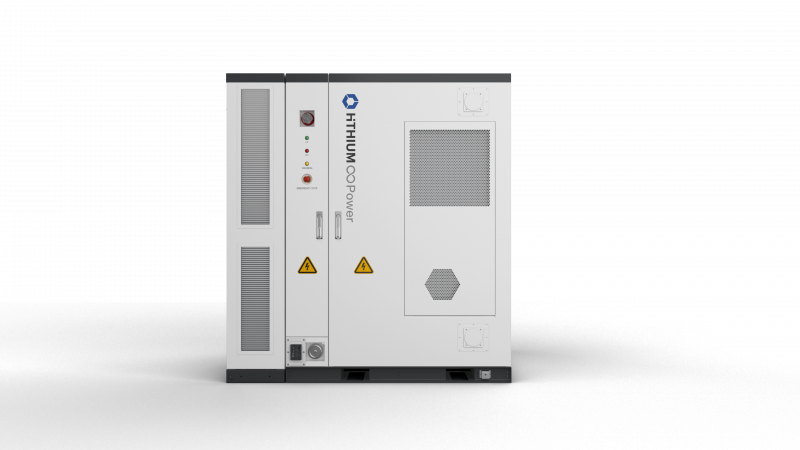
A commercial battery energy storage system (BESS) stores electrical energy and delivers it through a power conversion system (PCS). A typical installation includes battery modules, a battery management system (BMS), thermal management equipment, protection devices, and an energy management system (EMS). Traditional backup systems are designed primarily to maintain operations after utility power becomes unavailable. Diesel or natural gas generators convert fuel into electricity, while UPS equipment supplies short-duration power to sensitive loads.
These technologies overlap in some applications, but their operating characteristics differ significantly.
Comparison Factor | Commercial Battery Storage (BESS) | Diesel or Gas Generator | Traditional UPS |
Primary function | Energy management, peak shaving, load shifting, and configured backup power | Emergency or standby electricity generation | Short-duration power continuity and conditioning |
Energy source | Stored grid electricity or renewable energy | Diesel, natural gas, or another fuel | Stored electrical energy |
Response time | Power electronics can respond in milliseconds; actual transfer time depends on system design | Typically requires seconds to start and accept load | Online double-conversion UPS provides continuous conditioned output |
Operating duration | Determined by usable battery capacity and electrical load | Determined by fuel availability, equipment ratings, and maintenance requirements | Typically minutes to support orderly shutdown or generator startup, depending on battery sizing |
Peak demand reduction | Yes, through controlled battery discharge | Possible in certain configurations, but may face fuel costs, emissions restrictions, and operating limitations | Not normally its primary function |
Renewable energy integration | Stores surplus solar or wind electricity | Can operate within hybrid microgrids | Limited conventional energy-management functionality |
Local exhaust emissions | None during electrical discharge | Combustion emissions during operation | None during battery discharge |
Maintenance requirements | Electrical inspections, cooling-system checks, monitoring, and battery health management | Engine servicing, fuel-system maintenance, testing, and inspections | Battery testing, electronics maintenance, and periodic replacement |
Energy replenishment | Requires charging electricity and sufficient charging time | Requires fuel supply | Requires recharging after discharge |
Potential everyday financial value | Demand-charge reduction, energy arbitrage, solar self-consumption, and eligible grid services | Primarily outage protection, with additional applications where permitted | Primarily outage protection and power quality |
Key takeaway: A generator can be more practical for an outage lasting several days, provided fuel remains available. Battery storage becomes particularly attractive when businesses need daily energy management alongside several hours of backup capability. A UPS remains important where sensitive equipment requires continuous power without transfer interruption.
A C&I BESS charges when electricity is available or economically favorable and discharges when additional power is needed. For example, a manufacturing facility might charge its batteries overnight when electricity prices are lower, discharge during an expensive afternoon pricing period, and retain a designated reserve for emergency power. The energy management system coordinates these operating modes while the BMS monitors cell voltage, temperature, current, and state of charge (SOC).
Several technical parameters determine system performance:
· Rated power (kW): The amount of electrical power the system can deliver at a given moment.
· Energy capacity (kWh): The quantity of electricity stored in the battery.
· Round-trip efficiency (RTE): The ratio of electricity recovered to electricity used for charging.
· Depth of discharge (DoD): The proportion of battery capacity discharged during operation.
· State of health (SOH): An indicator of remaining battery capability compared with its original condition.
· Power conversion system (PCS): The equipment responsible for converting electrical energy between DC and AC.
Battery discharge duration can be estimated using a basic equation:
Backup Duration (hours) = Usable AC Energy (kWh) ÷ Average Electrical Load (kW)
Suppose a facility has a 1,000 kWh battery system. If 85% of its nominal energy is available as usable AC output under the selected operating conditions, the system can provide approximately 850 kWh.
At an average critical load of 200 kW, the theoretical backup duration would be:
850 kWh ÷ 200 kW = 4.25 hours
Actual runtime must account for discharge-power limits, changing loads, ambient conditions, battery degradation, and any required emergency reserve.
A conventional generator generally remains on standby until an automatic transfer switch (ATS) detects an unacceptable grid condition. The generator then starts, reaches suitable voltage and frequency, and begins supplying the connected loads. This arrangement is effective for facilities requiring extended emergency operation. However, generator startup introduces a delay, so facilities with sensitive equipment often require a UPS to bridge the interruption.
Fuel consumption also becomes an operational consideration. Generator efficiency and fuel use depend on engine size, loading, fuel type, and operating conditions. Running an oversized generator at low load can reduce fuel efficiency and may introduce additional maintenance concerns.
There is no universal winner in a commercial battery storage vs diesel generator evaluation. Different facilities value electricity cost savings, runtime, response speed, noise levels, and fuel independence differently.
Manufacturers often experience short periods of high electricity demand when multiple machines operate simultaneously. These peaks can increase monthly demand charges even when total electricity consumption remains relatively stable. A battery system can discharge during these intervals to reduce the maximum demand recorded by the utility. Consider a factory where electricity demand reaches 1,200 kW for 30 minutes, while management wants to limit grid demand to 900 kW.
The battery must supply:
Peak reduction requirement = 1,200 kW − 900 kW = 300 kW
Energy required = 300 kW × 0.5 hours = 150 kWh
A properly configured battery system could cover this event if its available power and energy are sufficient. A generator could also produce 300 kW, but the operator would need to account for fuel consumption, local emissions regulations, and whether parallel operation with the utility is permitted. Better fit: Battery storage for regularly occurring demand peaks; generators for extended outage protection. A hybrid configuration may provide both benefits.
Data centers require carefully coordinated power protection because even a brief interruption can affect servers, networking equipment, and supporting systems. Online UPS systems are specifically designed for continuous conditioned power. Battery energy storage can support broader energy management and resilience objectives, but it should not automatically be treated as a replacement for a data center UPS. For facilities exploring battery-based backup, engineers must evaluate transfer arrangements, inverter overload capability, harmonics, fault protection, and compatibility with existing UPS equipment.
Better fit: UPS for immediate no-break protection, combined with generators and/or battery storage according to required redundancy and runtime.
Shopping centers, offices, and large commercial buildings often have predictable daily load patterns. Battery storage can reduce purchases during expensive periods and increase the use of locally generated solar electricity. It may also provide backup for selected essential services, such as security systems, communications, or emergency-support equipment, where approved by the electrical design. Traditional generators remain useful when the primary objective is emergency operation rather than regular energy optimization.
Better fit: BESS where demand charges, time-of-use tariffs, and solar generation create measurable financial opportunities.
Mining operations, remote processing facilities, and locations with weak grid connections may experience outages lasting many hours or days. Battery storage can handle short-term load fluctuations and reduce generator runtime. However, an extended outage may exhaust the stored energy unless sufficient solar generation or another charging source is available. A hybrid power architecture can use batteries for short-term fluctuations and generators for prolonged energy supply.
Better fit: Hybrid battery-generator systems where long-duration resilience and fuel optimization are both important.
Purchase price is only one part of a commercial energy storage investment. Businesses should compare the full cost of ownership and the financial value generated during normal operation.
A conventional generator typically requires an engine-generator set, transfer equipment, fuel infrastructure, exhaust arrangements, installation, and commissioning. A commercial BESS generally requires battery equipment, power conversion, controls, cooling, protection systems, electrical integration, installation, and commissioning. Battery-system pricing varies with energy capacity, power rating, discharge duration, fire protection requirements, local labor costs, and grid interconnection conditions.
Compare current quotations for equivalent duties and clearly defined supply scopes. A battery-pack price excludes important project costs and should not be compared directly with an installed generator quotation. Include all equipment, integration work and site-specific compliance requirements on both sides.
A generator consumes fuel whenever it produces electricity. A battery does not consume fuel at the point of operation, but it must purchase or receive charging energy, and some electricity is lost during charging and discharging. For example, a battery operating at 90% AC-to-AC round-trip efficiency must receive approximately 1,111 kWh to deliver 1,000 kWh back to the facility.
Under an illustrative time-of-use tariff:
Financial Variable | Illustrative Value |
Off-peak electricity price | $0.08/kWh |
Peak electricity price | $0.22/kWh |
Battery round-trip efficiency | 90% |
Electricity discharged daily | 1,000 kWh |
Daily charging electricity required | Approximately 1,111 kWh |
Daily charging electricity cost | Approximately $88.89 |
Value of peak electricity displaced | $220.00 |
Illustrative daily gross energy arbitrage benefit | $131.11 |
Illustrative annual gross benefit at 300 operating days | Approximately $39,333 |
These figures are calculated examples, not actual customer results. They exclude battery degradation, maintenance, financing, taxes, auxiliary consumption beyond the assumed system efficiency, and tariff restrictions. The calculation also assumes the full 1,000 kWh can be discharged during peak-price periods on each operating day.
Many commercial electricity tariffs include demand charges based on the highest measured demand during a billing period. Suppose a facility reduces its billable peak by 300 kW and the applicable demand charge is $20/kW per month.
Potential monthly demand-charge reduction = 300 kW × $20/kW = $6,000
If the same reduction is achieved and recognized in all 12 billing periods, the illustrative annual benefit would be $72,000. Actual savings depend on the utility tariff, demand-measurement interval, load patterns, ratchets, and whether the battery successfully controls each billing period's highest demand. Importantly, energy arbitrage and demand-charge savings cannot always be added together without adjustment. The same battery capacity may be needed for both applications at overlapping times.
Businesses should assess the following over the intended project lifetime:
· Initial equipment and installation costs.
· Electricity purchases or generator fuel expenses.
· Scheduled maintenance and equipment replacement.
· Battery degradation and end-of-life capacity.
· Generator overhaul or replacement requirements.
· Potential electricity-bill savings and eligible grid-service revenue.
· Financial value of avoided outages and reduced production losses.
· Insurance, permitting, environmental compliance, and decommissioning costs.
Two useful evaluation metrics are net present value (NPV) and levelized cost of storage (LCOS). NPV accounts for the timing of costs and financial benefits, while LCOS evaluates the lifecycle cost per unit of discharged electricity. A BESS with higher upfront costs may achieve attractive lifecycle economics when it operates regularly. Conversely, a generator can remain the financially appropriate choice for a facility that rarely loses power and has little opportunity to benefit from daily battery operation.
HiTHIUM's C&I catalogue describes a science-park installation in Taiwan, China, using 108 systems rated at 125 kW/261 kWh. The reported combined scale is 13.5 MW/28.188 MWh, and the listed applications are peak-valley electricity arbitrage and backup power. This reference shows that daily energy management and backup can be included in one project. It does not establish uninterrupted transfer performance, whole-site backup duration or a financial return for another facility. Those capabilities depend on the PCS, switching arrangement, protected loads and reserved battery energy.
Battery storage provides operational flexibility, but several limitations deserve careful consideration before investment.
A battery cannot produce energy indefinitely. A battery providing 500 kWh of usable AC energy supporting a constant 250 kW load provides approximately two hours of operation under idealized conditions. If a facility must maintain the same load for 24 hours, it would need approximately 6,000 kWh of delivered energy, excluding additional engineering margins and changes in load. This can make generator-supported or hybrid systems more practical for prolonged outages.
Lithium-ion batteries gradually lose available capacity due to calendar aging and cycling. Temperature, charging conditions, depth of discharge, and daily throughput influence this process. Project planning should therefore use warranted end-of-life capacity rather than assuming that the original battery capacity remains unchanged throughout operation.
Not every grid-connected commercial BESS can automatically supply electricity during an outage. Backup operation may require grid-forming inverter capability, suitable isolation and transfer equipment, black-start functionality, protection coordination, and compatible site loads. These capabilities must be confirmed through engineering design and commissioning tests.
Commercial battery systems require appropriate safety engineering, including thermal management, electrical protection, fault monitoring, and fire-risk mitigation. Applicable requirements may include NFPA 855, UL 9540, UL 9540A testing, and local fire and electrical codes, depending on the jurisdiction and project configuration. Relevant compliance documentation should be verified for the exact product and installation rather than assumed from the battery chemistry alone.
HiTHIUM develops energy storage technologies for commercial, industrial, and utility-scale applications, with a focus on lithium iron phosphate (LFP) batteries, integrated system design, thermal management, and long-duration energy storage. For commercial customers, several product characteristics are worth evaluating against project requirements.
HiTHIUM's portfolio includes the ∞Block 125kW/261kWh all-in-one configuration and the ∞Block 418kWh and ∞Power 1022kWh battery cabinets. The latter configurations require a matched external PCS. HiTHIUM can coordinate with PCS manufacturers on the complete solution. The catalogue describes a 250 kW solution using one ∞Power 1022kWh battery cabinet and an external PCS. Its nominal energy-to-power ratio is approximately four hours. Guaranteed backup runtime must be calculated from usable AC energy, the actual critical load and future capacity, rather than the nominal ratio alone.
The ∞Power 1022kWh battery cabinet occupies approximately 3.4 m². This is the battery cabinet footprint only. The complete installation also needs space for the external PCS, service access, safety clearances and any other site equipment. HiTHIUM's product announcement states an approximately 90% designed round-trip efficiency for the 1022kWh cabinet. Confirm the measurement boundary and contractual system value before applying it to a backup or savings assessment.
Explore the HiTHIUM C&I battery storage product range and commercial and industrial energy storage solutions when comparing configurations.
The best approach is to rank each solution according to the facility's actual priorities rather than assume that newer technology is always preferable.
Business Requirement | Recommended Starting Point | Reason |
Reducing frequent electricity demand peaks | Commercial BESS | Battery discharge can reduce grid imports during expensive demand periods. |
Storing surplus rooftop solar electricity | Commercial BESS | Stored solar electricity can be used outside solar production hours. |
Maintaining power during occasional multi-day outages | Generator or hybrid system | Fuel-based generation can provide extended runtime when sufficient fuel is available. |
Protecting servers from instantaneous interruptions | Online UPS | Designed to provide continuous conditioned electricity to sensitive equipment. |
Combining daily electricity savings with outage resilience | Commercial BESS or hybrid system | Storage can perform normal energy-management functions while reserving emergency capacity. |
Operating an isolated industrial site | Hybrid battery-generator system |

OK
Subscription Success
Congratulations on your successful subscription to HiTHIUM news
Got it
Please leave your business requirements and our experts will contact you as soon as possible.
|



 Previous: