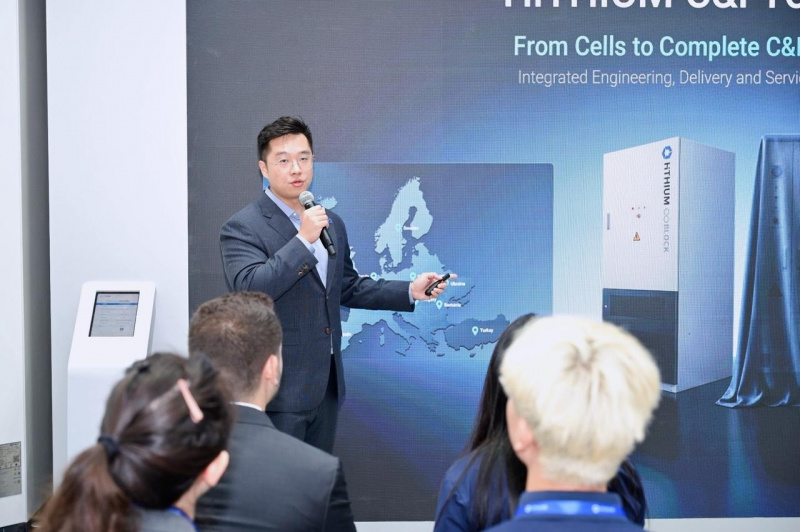
At The Smarter E Europe 2026 in Munich, HiTHIUM launched the ∞Power 1022kWh liquid-cooled commercial and industrial energy storage cabinet. The system has 1022.72kWh of nominal capacity and supports a 0.25P charge and discharge rate.
This operating profile corresponds to approximately 250kW over four hours before system losses and operating limits are considered. It allows a C&I battery to shift energy across sustained demand and price windows rather than respond only to short power spikes.
This article examines how a 1MWh four-hour BESS supports peak shaving, PV self-consumption and backup power, followed by a comparison between one high-capacity cabinet and multiple smaller BESS units.
The financial value of a four-hour BESS depends on the tariff, interval load profile and dispatch strategy. Power and duration must match the events responsible for the site’s highest costs.
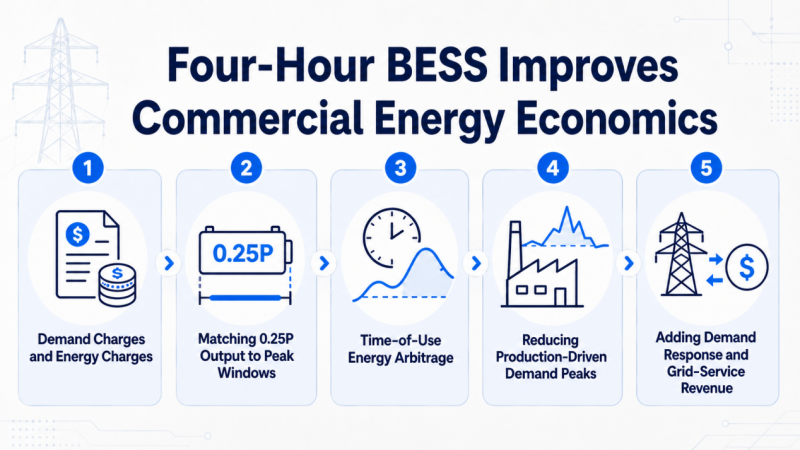
Energy charges reflect total consumption, while demand charges generally reflect the highest grid demand recorded during an interval. The C&I battery can reduce maximum demand or shift grid purchases to lower-priced hours. Tariff modeling determines which action receives priority.
At 0.25P, approximately 1MWh corresponds to about 250kW over four hours. This profile can cover sustained production or peak-price periods.
Usable output depends on the power conversion system, operating state-of-charge range and capacity reserved for PV charging or backup power.
Under time-of-use pricing, the BESS charges in lower-priced hours and discharges when electricity becomes more expensive. Four-hour operation can cover much of an afternoon or evening peak window if the price spread covers losses, auxiliary consumption and cycling costs.
Large motors, process heating, refrigeration or simultaneous production lines can establish the monthly demand peak. The energy management system can discharge as grid import approaches a target limit. Load forecasting helps preserve enough energy for the most expensive event.
Demand response and balancing-market services may add revenue where rules permit. Renewable growth, balancing pressure and negative electricity prices are increasing demand for flexible storage in Europe. Capacity committed to these services must still be coordinated with bill savings and backup reserves.
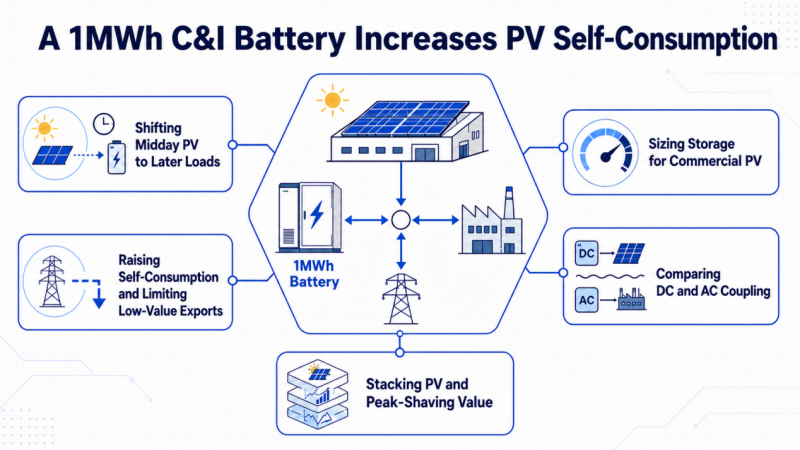
Placed between the PV array and site loads, a BESS stores solar electricity that cannot be used immediately and supplies it when onsite demand exceeds PV output.
PV production usually peaks around midday, while manufacturing, cooling or logistics loads may remain high into the afternoon and evening. The battery stores the midday surplus and releases it during these later load periods.
Using stored PV electricity onsite reduces the amount purchased from the grid. It also limits exports when feed-in compensation is low or electricity prices are negative, allowing more solar generation to replace higher-cost retail electricity.
A 1MWh cabinet can complement light-industrial rooftop PV or ground-mounted arrays that produce a regular midday surplus. The required number of BESS units depends on the amount of excess solar energy and the site’s later-day electricity demand.
DC coupling connects the PV array and battery on a shared DC path. It can direct surplus PV generation to the battery and capture energy that would otherwise be clipped by the PV inverter.
AC coupling connects the battery through a separate bidirectional power conversion system, making it easier to integrate with an operating PV installation. The ∞Power 1022kWh uses a 1000V DC system designed to adapt to AC grids of 400V and above.
The same storage asset can charge from surplus PV and discharge when site demand reaches its peak. This combines higher PV self-consumption with lower grid purchases and reduced demand peaks.
When an outage threatens production continuity, the value of backup power comes from preventing operational and financial losses rather than maintaining general comfort.
The value of backup power can be measured through the production losses it prevents, including interrupted output, damaged work in progress, spoiled materials, restart labor and delayed deliveries. Sites with continuous or time-sensitive processes generally face higher outage costs.
The BESS can support production controls, process cooling, refrigeration, communications and safety equipment while noncritical loads disconnect.
With a compatible power conversion system, islanding switchgear and coordinated controls, it can provide short-term ride-through, enable a controlled shutdown or maintain critical loads until a generator starts.
Reserving more stored energy increases the duration available for critical loads but leaves less capacity for daily peak shaving and PV self-consumption. A fixed reserve provides consistent backup availability, while a dynamic reserve can change according to grid alerts, weather conditions and production schedules.
For short outages, battery storage can provide immediate support without fuel consumption or onsite combustion emissions. For longer outages, a hybrid system can use the battery for rapid response and the diesel generator for extended operation, reducing generator runtime, fuel costs and local emissions.
A single 1MWh cabinet can provide similar energy capacity to four 261kWh BESS units with fewer enclosures, onsite connections and management nodes. This simplifies space planning, project delivery, installation and lifecycle operations.
The ∞Power 1022kWh uses HiTHIUM’s ∞Cell 1175Ah lithium iron phosphate cells in a 1P272S architecture, integrating 1022.72kWh into one cabinet. The large-capacity cells reduce cell quantity by 70%, enabling higher integration with fewer cell-level connections and fewer cabinets for a 1MWh project.
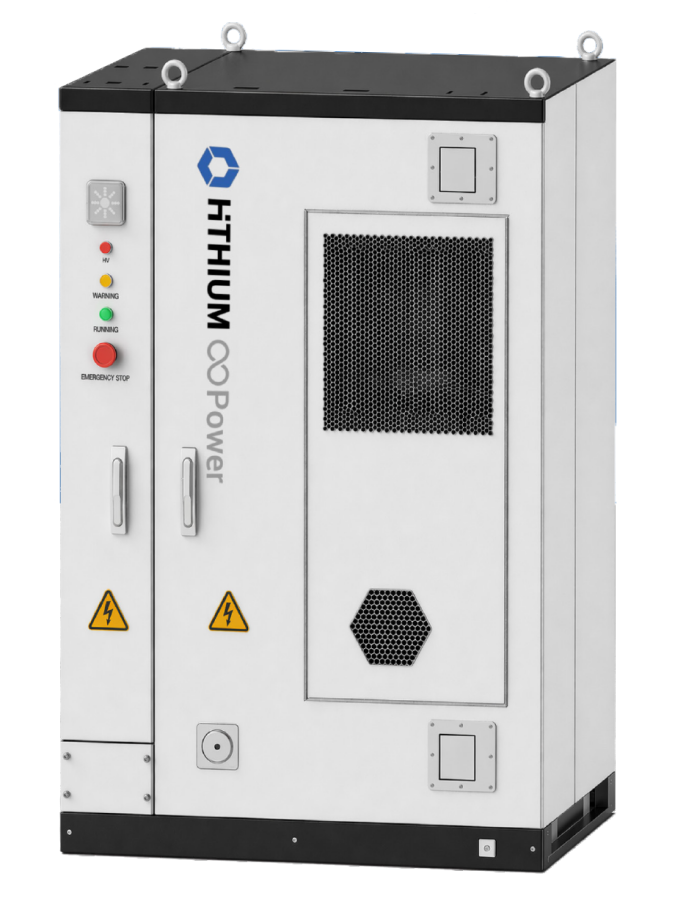
The cabinet occupies approximately 3.4m² and achieves a capacity density of around 300kWh/m². Compared with a conventional 1MWh configuration based on four 261kWh cabinets, it reduces the required footprint by approximately 32%. The more compact layout can lower land use, leasing expenses, foundation requirements and related civil-work costs.
A single cabinet reduces the number of equipment units, onsite connection points and commissioning nodes. Fewer electrical and communication interfaces simplify system integration, functional testing and final commissioning.
Fewer cabinets require fewer foundations, cable runs and terminations. This can shorten onsite installation and reduce balance-of-system costs associated with cabling, auxiliary equipment, construction work and commissioning.
Each 1MWh cabinet can be managed as one logical BESS unit within a multisite project portfolio. Consolidating alarms, operating data, maintenance records and equipment status reduces the number of assets handled by the operations team and simplifies fleet-level monitoring.
A four-hour BESS can reduce demand peaks, shift electricity purchases, increase PV self-consumption and support critical operations during outages. Its value depends on tariffs, load data, PV output, outage costs and capacity allocation.
HiTHIUM’s ∞Power 1022kWh combines a 0.25P operating rate, liquid cooling and high single-cabinet capacity for long-duration C&I applications.
Contact HiTHIUM to evaluate load data, PV integration, backup reserves and site requirements.



 Previous: