We were aware that utility-scale battery storage systems and utility-scale energy storage systems would be essential to maintaining regional power production when our team initially started looking into ways to sustain massive clean-energy bases throughout Inner Mongolia. Reliable energy buffering solutions are desperately needed due to the region's rapid expansion of solar and wind resources. As the technology team at HiTHIUM, we understood how critical it was to implement storage infrastructure that could support gigawatt-scale renewable projects while guaranteeing long-term system durability, safety, and consistency.
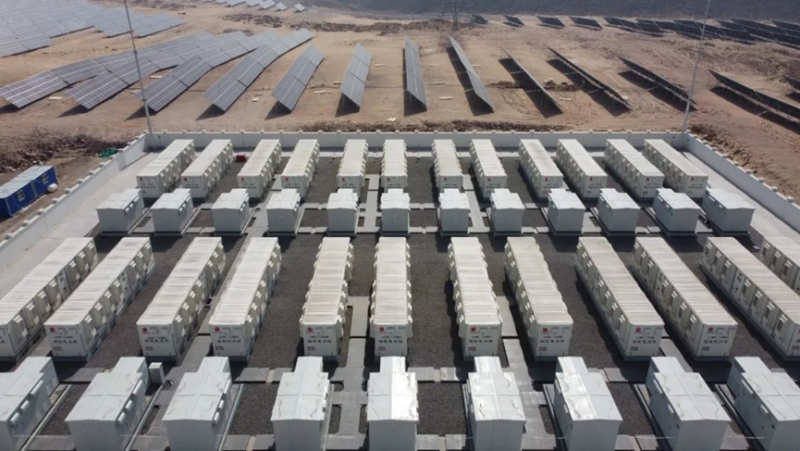
One of the most representative milestones in our recent journey is the Datang Inner Mongolia 1.7 million kW new energy storage project—an enormous initiative equipped with a total capacity of 490MW/980MWh and distributed across the Alxa League, covering eastern and western Inner Mongolia. Among these installations, the Datang Inner Mongolia Alxa League 180MW/360MWh energy storage project was recently completed and successfully connected to the grid.
Our role as the primary technology partner allowed us to supply HiTHIUM’s latest generation BESS equipment, purpose-built for demanding field conditions. Because these locations experience harsh temperatures, fluctuating humidity, and challenging logistics, the engineering team designed robust systems capable of delivering stable output under all operating cycles. These utility-scale energy storage systems not only help local renewable facilities maintain smooth power delivery but also strengthen the regional grid’s overall resilience.
What makes this project especially meaningful to us is its combination of solar and wind energy facilities. For example, the Datang Alxa League Lanshan Phase II 200MW photovoltaic-mining integrated project required an energy storage configuration of 60MW/120MWh, while the Uliji 400MW wind power project demanded a 120MW/240MWh storage capacity. Each site presented different power-generation patterns, requiring us to customize integration planning and adapt the system’s performance characteristics accordingly.
The Lanshan project alone is expected to generate around 300 million kWh of electricity per year—equivalent to saving roughly 130,000 tons of coal and cutting 370,000 tons of CO₂ emissions annually. Meanwhile, the Uliji wind project introduces 64 wind turbine units with a single-unit capacity of 6.25MW, totaling 400MW of clean power generation. With an annual output of around 1 billion kWh, this initiative eliminates approximately 312,000 tons of coal consumption and reduces 829,000 tons of CO₂ each year.
Our team is proud that HiTHIUM’s technologies enable both projects to operate more efficiently. Without high-quality utility-scale battery storage systems, neither site would achieve the same level of energy utilization nor contribute as effectively to regional carbon-reduction efforts.
Inner Mongolia’s extreme climate and remote geographical conditions required us to act quickly while still ensuring exceptional performance and safety. By leveraging HiTHIUM’s advanced module architecture, optimized thermal-management system, and long-cycle-life battery technology, our team successfully addressed multiple engineering challenges in a shorter time frame than expected.
Our experience in earlier regional deployments—such as Huaneng Shangdu and Tumd Right Banner—gave us a foundation to enhance configuration strategies for land use, efficiency, and operational reliability. Together, these accomplishments show how utility-scale energy storage systems can transform large-scale clean-energy bases into stable, high-performing green power hubs.
Working on these remarkable projects has reinforced our belief that advanced energy storage is the backbone of the global renewable transition. By continuously refining HiTHIUM’s BESS technologies and expanding our presence in projects across Inner Mongolia, we aim to elevate the performance of massive wind and photovoltaic bases and accelerate the regional shift toward low-carbon development. As our team continues pushing boundaries, we remain committed to shaping a future where utility-scale battery storage systems empower cleaner, smarter, and more resilient energy networks worldwide.




 Previous: