When we talk about energy storage safety, the conversation often starts with individual cells. Yet the real risk vectors—thermal runaway propagation, electrical arc faults, and uneven thermal distribution—only emerge when many cells are connected together. That is where thoughtful module-level engineering makes all the difference. For utility-scale and commercial installations, a well-designed ESS battery module does more than hold cells in place; it actively contains, monitors, and mitigates potential safety hazards before they escalate. At HiTHIUM, we have integrated multiple protective layers directly into our module architecture to address these demands. This article explores how china energy storage module design is evolving from passive packaging to an active safety backbone.
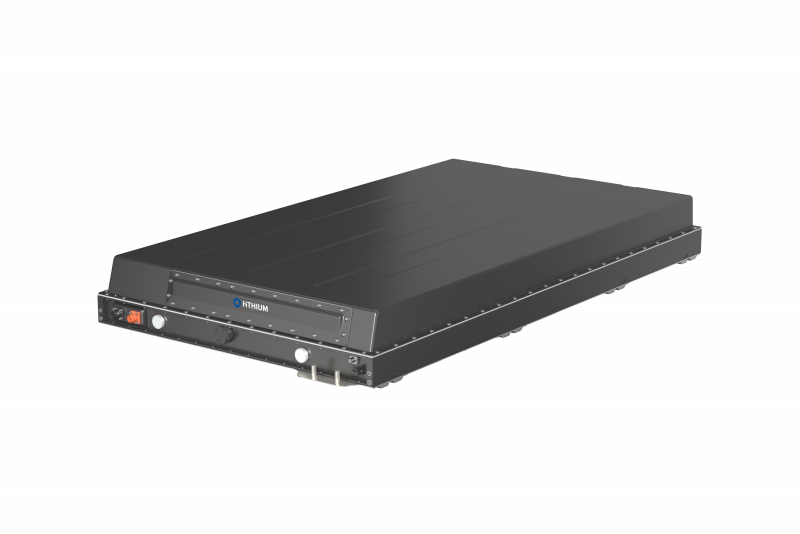
The first line of defense in any ESS battery module lies in its mechanical design. Without proper cell-to-cell spacing, current-carrying capacity, and venting pathways, a single cell anomaly can quickly induce neighboring cells into failure. Our module architecture incorporates three-dimensional venting channel design paired with directional valve technology, allowing precise pressure control and exhaust direction. This prevents heat and gas accumulation from cascading across the entire module. Additionally, full-tab stacking processes and specialized coating separators eliminate stress inhomogeneities found in conventional winding cores, delivering superior long-term cycle consistency. For china energy storage module manufacturers, this structural attention separates robust systems from those prone to early-life failures.
Heat is the silent enemy of battery longevity and safety. An ESS battery module that cannot maintain uniform temperature distribution will develop hot spots, accelerating degradation and increasing thermal runaway risks. Our thermal management system design ensures each cell operates within an optimal temperature window, enhancing energy efficiency and prolonging usable life across thousands of cycles. The liquid cooling configuration adopted in our module line maintains tight temperature uniformity across all cells, a critical requirement for high-rate charge/discharge applications. For any china energy storage module deployed in field conditions, effective thermal regulation is directly tied to operational safety and system availability.
Module-level fire detection and suppression represent a paradigm shift from facility-wide protection. Rather than waiting for a fire to grow large enough to trigger room-level systems, our ESS battery module is equipped with a multi-sensor compound fire detection and alarm device, implementing pack-level fire protection. This approach—also validated through the world's first open-door large-scale fire test on a 6.25MWh long-duration energy storage system—enables precise early-stage intervention. For china energy storage module applications, this shift to pack-level protection means localized hazards can be contained without taking entire strings offline, maintaining system availability while enhancing safety.
Energy storage safety depends on more than cell chemistry alone—it relies on how cells are integrated into a cohesive, protective structure. At HiTHIUM, our modules are engineered from the ground up to meet this responsibility. From directional venting channels to pack-level fire detection and uniform liquid cooling, each ESS battery module we produce reinforces the safety chain. As china energy storage module technology continues to mature, modular intelligence will remain a cornerstone of reliable, long-duration storage solutions across the globe.




 Previous: