Let us start with a straightforward observation: the ESS battery module is the unsung hero of any reliable storage project. At HiTHIUM, we have learned that focusing only on cells or full systems misses the critical layer where real-world performance is won or lost. A module must balance electrical connections, temperature control, and physical protection without introducing new failure points. That is why our engineering team treats module design as a discipline of its own—not just an intermediate step. Whether the application is peak shaving or renewable integration, the choices made at the module level directly influence safety, maintenance costs, and system lifespan.
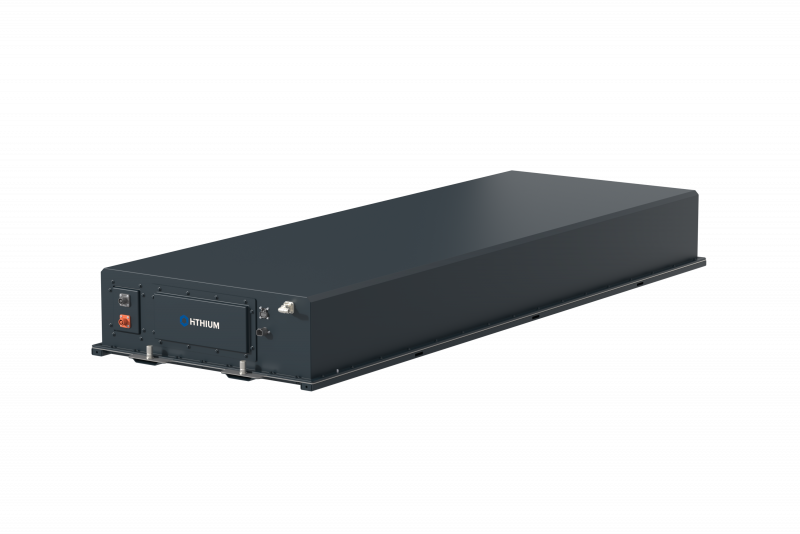
Heat is one of the biggest challenges any energy storage system faces. When cells operate outside their optimal temperature range, performance degrades and cycle life shortens. Our liquid-cooled modules, such as the 1P52S configuration with a 195kWh capacity, use a thermally conductive silicone pad interface between the heat sink and the cell base to ensure uniform temperature distribution across every cell. The liquid cooling system maintains each unit at its most efficient working temperature, directly boosting overall energy efficiency. A consistent thermal environment also prevents localized hotspots that can trigger accelerated aging or safety events. For any energy storage module supplier, mastering thermal control at the module stage separates short-lived products from those designed for a full decade of service.
Safety cannot be an afterthought in battery module engineering—it must be woven into the physical architecture from the start. Our ∞Pack 195kWh 2h module, equipped with the LFP314-1P104S configuration, demonstrates this principle in action. The module incorporates a multi-hazard composite fire detection and alarm device to achieve pack-level fire protection. Beyond fire suppression, the mechanical structure of each module is designed to contain thermal events and prevent propagation to neighboring cells. The ESS battery module also includes voltage and temperature monitoring points that feed real-time data to the battery management system, allowing early detection of anomalies before they escalate. These multiple layers of protection work together as a unified safety strategy, not a collection of independent features.
The true value of a well-engineered module becomes apparent when scaling from cells to full systems. By grouping cells into standardized modules, we reduce assembly complexity and improve serviceability. When a module needs maintenance or replacement, technicians can swap it out without dismantling the entire system—a significant advantage for large installations where downtime carries heavy costs. The LFP314-1P52S and LFP314-1P104S modules illustrate how different configurations serve different project needs while sharing the same underlying engineering philosophy. Each module meets GB/T standards for grid-connected applications, providing a consistent foundation that project developers can rely on. As an energy storage module supplier, we believe that thoughtful modular design transforms installation, operation, and maintenance from major headaches into routine procedures.
The ESS battery module is where abstract battery chemistry meets practical system engineering. By prioritizing thermal management, integrated safety, and modular architecture, we create intermediate assemblies that make large-scale storage feasible and cost-effective. From the 195kWh liquid-cooled module to our high-capacity ∞Pack platform, every product reflects the same engineering logic: build the connection between cell and system so well that customers never have to worry about what happens inside the box. For project owners seeking dependable performance and straightforward maintenance, that peace of mind is exactly what a properly designed energy storage module supplier should deliver.




 Previous: