Energy storage module factories that embrace standardization introduce levels of predictability and dependability that customized, one-off designs struggle to match. At HiTHIUM, we build our ESS battery module portfolio around a clear principle: when each module is engineered to consistent dimensional, electrical, and thermal specifications, the value does not stop at the factory gate. It extends into every phase of a project—from system integration and site commissioning to daily operations and long-term maintenance. Standardization is not about limiting possibilities. It is about creating a platform that makes quality repeatable, safety verifiable, and performance consistent across deployments that may sit thousands of kilometers apart.
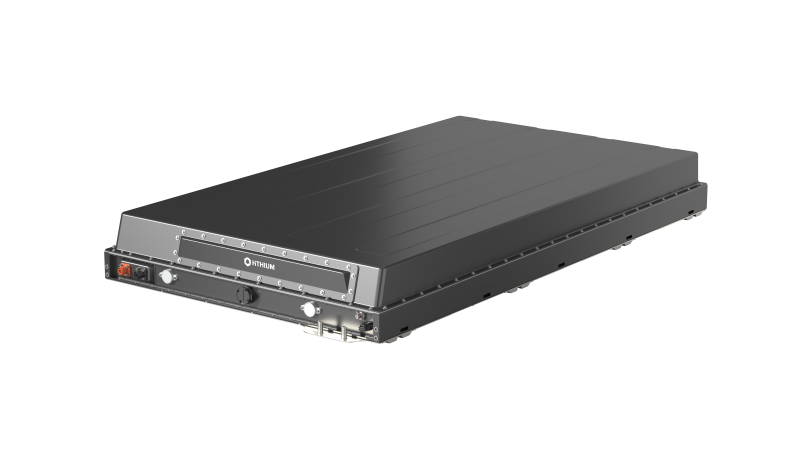
The first advantage of running energy storage module factories around standardized product lines is quality that can be measured, monitored, and maintained at scale. Our ∞Pack 195kWh 2h module, built on the 1P104S configuration and carrying the LFP314-1P104S module model designation, reflects this approach by using established cell platforms—specifically, our 587Ah lithium iron phosphate cells—within a fixed structural and electrical architecture. When every module shares the same bill of materials, the same assembly sequence, and the same testing protocols, deviations become easier to detect and correct.
The manufacturing benefit flows directly into asset performance. An ESS battery module produced under tightly controlled, repeatable conditions passes through quality gates that include dimensional verification, capacity grading, and safety screening. The ∞Pack 195kWh 4h variant achieves a gravimetric energy density of ≥167 Wh/kg and a volumetric energy density of ≥274 Wh/L. Every module within its category delivers against these parameters because the production line is tuned for consistency, not adaptation. For project developers ordering multiple containers for a single site, this uniformity means that any module can be installed into any slot without performance mismatch.
Standardization also unlocks deployment flexibility. A ESS battery module designed to a common mechanical and electrical interface can serve across power generation, grid-side, and commercial and industrial (C&I) storage applications without redesign. The ∞Pack family, for instance, is purpose-built for this kind of broad applicability. Liquid cooling using glycol-water coolant ensures matched thermal performance across the entire range, while a multi-function composite fire detection and alarm system provides pack-level fire protection consistently throughout the product line.
A HiTHIUM Bess container for a solar-coupled power plant shares module architecture with a microgrid for C&I load shedding. Custom solutions require less engineering due to interchangeability. System integrators acquainted with the ∞Pack platform can utilise the same installation protocols, lifting and wiring processes, and commissioning checklists independent of the end-use scenario. The modules meet environmental and safety standards with a minimum operational altitude of ≤4,000 meters and strict certification compliance (GB/T 36276-2023 and GB 44240-2024 for the ∞Pack 195kWh 2h).
When modules follow a unified design language, operations and maintenance teams never face the unexpected complexity of encountering unfamiliar hardware. Every ESS battery module in the ∞Pack series uses the same liquid-cooling thermal management approach, which is engineered to keep cells operating within their ideal temperature window and thereby improve energy efficiency. That thermal uniformity is critical because cell temperature variation within a pack is one of the largest contributors to accelerated degradation.
For asset operators, standardization translates into reduced sparing complexity. A single replacement module type covers multiple systems, minimizing warehousing requirements and eliminating the risk of obsolete or mismatched inventory. The consistent form factor of the ∞Pack 195kWh 4h, with its 1P52S configuration, means that maintenance procedures—whether involving module-level diagnostics or full replacement—follow a defined, repeatable process. In industries where unplanned downtime carries financial consequences, the predictability that standardized energy storage module factories deliver is itself a valuable layer of operational resilience.
We believe the real strength of the ∞Pack platform is not any single design feature, but the compounding benefits of a standardized approach applied end to end—from high-volume energy storage module factories to operation on site. Each module emerges from a manufacturing environment optimized for repeatability; each installation relies on the same thermal, electrical, and safety architecture; and each maintenance event follows procedures built around a known, consistent product. In an energy storage industry where scale deployment is accelerating, the ability to deliver dependable, interchangeable ESS battery module solutions across diverse applications is the difference between a project that merely functions and one that performs with confidence for decades.




 Previous: