When we talk about keeping energy storage systems running reliably over their full lifespan, the conversation often turns to battery cells or whole-system software. However, we at HiTHIUM have found that a well-designed ESS battery module sits at the heart of low-maintenance, high-uptime operations. A properly engineered module does more than just hold cells together—it shapes how easily technicians can access components, how quickly faults can be isolated, and how cost‑effectively a system can be serviced over decades. Choosing the right energy storage module company matters because module-level design decisions directly impact everything from spare parts inventory to field service hours. In this article, we break down three key ways that intelligent module architecture improves system maintenance.
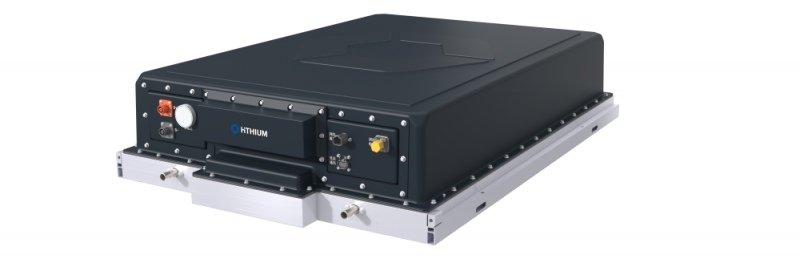
Many maintenance headaches are actually design problems in disguise. When an ESS battery module is built with serviceability in mind, common tasks like inspections, firmware updates, or component swaps become straightforward. Standardized module dimensions and consistent electrical interfaces mean that a technician trained on one rack can service many others without special tools or extensive retraining. This is why our ∞Pack series uses uniform mechanical footprints and communication protocols across different capacity variants. For operators, this translates into shorter mean time to repair and less reliance on highly specialized on‑site staff. A thoughtful energy storage module company designs for the person who will open the cabinet years after installation, not just for the factory floor.
Predictive maintenance is only as good as the data available at the module level. Our ESS battery module products integrate cell‑voltage sensing, temperature monitoring, and current measurement into a compact package, feeding real‑time information back to the central battery management system. This allows the system to flag developing issues—such as a single weak cell or a thermal gradient—before they cause a module‑level failure. For businesses relying on energy storage for revenue or critical backup power, catching a problem early can mean the difference between a scheduled service visit and an emergency call‑out. As an energy storage module company, we embed these monitoring capabilities directly into the module design, reducing the need for extra external sensors or complex retrofits.
Perhaps the most tangible maintenance benefit comes from the ability to replace individual modules without disturbing the rest of the system. When a single module reaches the end of its service life or develops an internal fault, swapping it out should be a quick, safe procedure. Our ∞Pack modules are designed with front‑accessible terminals, standardized busbar connections, and clear mechanical guides that allow one technician to complete a replacement in minutes rather than hours. This plug‑and‑repair approach eliminates the need to de‑energize entire racks or call in specialized crane crews. A capable energy storage module company also ensures that replacement modules are readily available and electrically compatible with earlier production batches, so operators are not forced into expensive whole‑system upgrades for a single faulty unit.
Well‑designed modules do more than organize cells—they directly shape the maintenance experience over the entire life of an energy storage system. From service‑focused physical design to intelligent onboard monitoring and fast, tool‑friendly replacement, module‑level choices drive real operational savings. HiTHIUM Bess continues to refine our ∞Pack platform to make maintenance simpler, faster, and more predictable. When you start with a smart ESS battery module, the rest of the system takes care of itself.




 Previous: