To size a commercial and industrial battery energy storage system, calculate the AC power and delivered energy required for its intended duty, then account for the usable battery window, conversion losses, future degradation and any backup reserve. Validate the candidate configuration against interval load data and available charging time. A facility's annual electricity consumption or grid connection rating alone cannot determine the right BESS size.
This guide sets out a practical sizing process for commercial buildings, manufacturing facilities and industrial sites. It distinguishes the nominal energy printed on a battery cabinet from the energy that the complete installation must deliver at the customer connection point.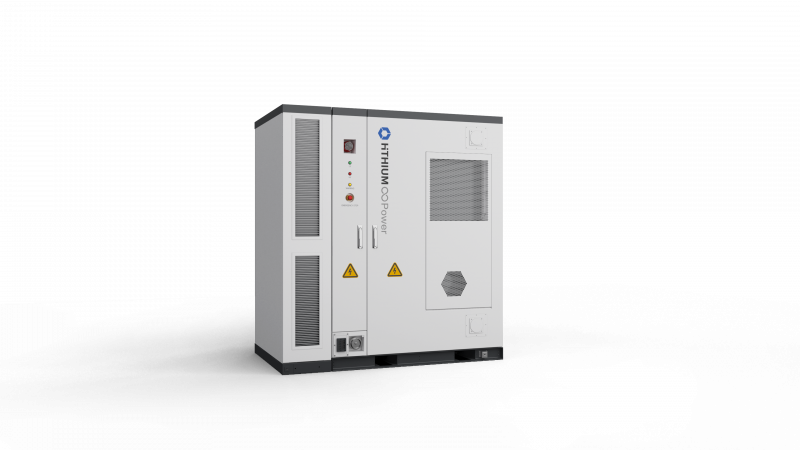
Start with the job the battery must perform. Peak shaving limits grid import during billing intervals. Time-of-use energy shifting moves purchases between price periods. Solar self-consumption stores eligible surplus generation. Backup supplies identified loads during an outage. Each application creates a different power requirement, energy window and operating schedule.
Application | Power requirement | Energy requirement | Important constraint |
Peak shaving | Largest required reduction in metered import | Energy above the target across the peak window | Billing interval, charging peaks and reserve |
Time-of-use shifting | Discharge rate that matches expensive-period demand | Eligible load shifted into lower-cost charging periods | Price spread after losses and cycling costs |
Solar self-consumption | Charging power that captures usable PV surplus | Surplus that can be used later on site | Export compensation and evening load |
Backup | Critical load plus validated transient requirements | Critical-load energy over the required outage duration | Transfer, islanding and minimum reserve |
When several applications share one battery, establish their priorities. A fixed backup reserve reduces the energy available for everyday price arbitrage. Conversely, a single discharge can reduce both energy charges and billed demand. Model that dispatch once and apply the relevant bill components rather than adding incompatible schedules.
Obtain at least 12 months of electricity bills and interval import data where available. Use a time step consistent with the utility billing interval, commonly 15 or 30 minutes. Record tariff periods, demand ratchets, operating schedules, solar generation, exports and significant seasonal changes. Check the connection voltage, transformer rating, switchgear, export limit and available equipment area. Include planned EV charging, electrification or production expansion as a separate future scenario. For backup, obtain a list of critical circuits, their running and starting power, acceptable interruption time and required supply duration.
Missing or inconsistent data should be resolved before treating an optimum size as a procurement specification. A preliminary estimate can identify useful capacity ranges, but a final proposal needs the load, tariff and site conditions that the equipment must satisfy.
For peak shaving, subtract the target grid import from the measured site load in each interval. If the result is positive, the battery must provide that difference; otherwise no peak-shaving discharge is needed. The highest positive difference is the preliminary continuous discharge-power requirement. For example, a site reaches 800 kW and aims to limit grid import to 600 kW. It needs up to 200 kW of AC battery output for those intervals. This calculation does not establish its energy capacity: a 15-minute excess requires much less energy than a three-hour excess.
Confirm the actual PCS output at the site voltage, temperature and altitude. Assess reactive-power obligations and any apparent-power constraint, since required reactive power can reduce the active power available from a given PCS. For backup, check motor starts, overload duration and the ability to establish and maintain the islanded supply.
Add the required AC output in each interval multiplied by the interval length. For a constant output, power multiplied by hours is sufficient. For a varying peak, use the actual shape instead of applying the highest excess to the entire window.
Consecutive 30-minute interval | Site load | Target grid import | Required BESS output | Delivered energy |
1 | 650 kW | 600 kW | 50 kW | 25 kWh |
2 | 800 kW | 600 kW | 200 kW | 100 kWh |
3 | 750 kW | 600 kW | 150 kW | 75 kWh |
4 | 650 kW | 600 kW | 50 kW | 25 kWh |
Total across two hours | Maximum 200 kW | 225 kWh |
This hypothetical load needs 225 kWh of delivered AC energy and up to 200 kW output. Using 200 kW for all two hours would give 400 kWh and overstate the energy requirement for this particular profile. A different day could require more energy, so check the complete historical record and credible future changes.
For preliminary sizing, divide the required AC energy by the usable battery fraction and discharge-path efficiency. If the project must still meet the same target at a defined future capacity, also divide by that capacity-retention fraction. Add separately defined reserves and auxiliary loads only where they are not already included in the chosen energy and efficiency boundary. For the 225 kWh example, assume a 90% usable battery window, 95% discharge-path efficiency and 80% capacity retention at the design condition. These are illustrative planning assumptions, not HiTHIUM product guarantees.
Initial nominal energy estimate = 225 kWh / (0.90 × 0.95) = approximately 263 kWh.
Nominal energy allowing for the assumed future capacity = 225 kWh / (0.90 × 0.95 × 0.80) = approximately 329 kWh.
A 261 kWh nominal cabinet would therefore be below the initial estimate under these particular assumptions, and below the future-capacity requirement. Energy capacity also does not establish that the cabinet can deliver the required 200 kW. Both the usable-energy calculation and continuous power rating must pass. Use manufacturer data for the exact system once a candidate is identified. Do not apply a usable-capacity adjustment twice if the datasheet already states guaranteed usable AC energy. Similarly, round-trip efficiency is not the same as discharge-path efficiency: the first includes charging and discharging, while the second applies to the discharge-energy requirement.
A backup target requires its own load calculation. For example, a constant 100 kW critical load over two hours needs 200 kWh delivered to those circuits before applicable reserves. With the same illustrative 90% usable window, 95% discharge efficiency and 80% future capacity, the nominal-energy requirement would be about 292 kWh.
Decide whether this backup reserve must remain available at all times, or whether the owner accepts lower reserve at particular times. If the 225 kWh peak-shaving event and the 200 kWh backup obligation must both be served without recharging, the preliminary delivered-energy requirement becomes 425 kWh. Under the same assumptions, it corresponds to about 621 kWh nominal energy. Do not add these requirements automatically if the agreed operating scenario does not require both.
Backup also requires appropriate switching, grid-forming capability where needed, protection coordination and an approved islanding design. A nominal capacity figure cannot establish uninterrupted supply or compliance for the protected load.
After discharge, the battery must recover enough energy before the next required event. At an assumed 90% AC-to-AC round-trip efficiency, delivering 225 kWh requires about 250 kWh of charging electricity. A 100 kW AC charging limit would require at least 2.5 hours in an ideal constant-power calculation. The actual schedule may take longer because of battery limits, auxiliary operation, available site capacity or charging taper. Set the charging limit against the site load and grid connection. An inexpensive tariff window does not provide unlimited connection capacity. Charging too aggressively can create a new demand peak or breach an import limit, reducing the projected savings.
For solar charging, compare PV surplus and site demand interval by interval. A large annual solar surplus may still provide insufficient charging energy on a cloudy day or during a winter backup event. Where solar is the only recharge source, model the relevant weather and availability scenarios.
HiTHIUM product | Nominal battery energy | Power conversion arrangement | Relevant application |
∞Block 125kW/261kWh | 261 kWh | Integrated AC/DC all-in-one configuration with 125 kW nominal AC power | Modular demand management and solar storage |
∞Block 418kWh | 418 kWh class | DC battery cabinet with a separately matched PCS | Projects using a coordinated battery and PCS solution |
∞Power 1022kWh | 1022.72 kWh | Battery cabinet matched with an external PCS; the catalogue describes a 250 kW solution | Approximately 1 MWh per battery cabinet for multi-hour storage |
HiTHIUM can work with PCS manufacturers to provide a coordinated battery and power conversion solution. The final quotation should identify the battery, PCS model, EMS, switchgear, transformer where required, and commissioning scope. Nominal battery energy is not the same as usable AC energy, and the catalogue configuration must be matched to the local grid and operating requirements. The catalogue describes a 250 kW solution using one ∞Power 1022kWh battery cabinet with an external PCS at 400 Vac. Its nominal energy-to-power ratio is approximately four hours. Usable AC discharge duration depends on the working SOC window, system losses, load and future capacity.
The ∞Block 418kWh provides a DC cabinet option for projects with a separately matched PCS. Its higher nominal energy than a 261kWh cabinet does not mean it has a fixed or interchangeable AC power rating. Confirm the battery voltage window, permitted power, PCS compatibility and number of cabinets per electrical arrangement. The ∞Power 1022kWh battery cabinet occupies approximately 3.4 m². This is the battery cabinet footprint only. The complete installation also needs space for the external PCS, service access, safety clearances and any other site equipment.
Explore the HiTHIUM C&I battery storage product range and commercial and industrial energy storage solutions when comparing configurations.
Simulate the candidate over the load and generation record, tracking state of charge, power limits, conversion losses and charging constraints at every interval. Test the most demanding peak windows, seasonal conditions and any required backup reserve. Use future degraded capacity for obligations that must still be met later in the project. Compare feasible sizes on their actual bill reduction and lifecycle cost. A larger battery may capture additional solar or cover a longer peak, but extra capacity can sit unused if the load, tariff or recharge window provides no opportunity to use it. Include equipment and installation costs, maintenance, replacement and any verified incentives in the financial model.
For commissioning, agree how continuous power, usable AC energy, efficiency and control functions will be measured. Set the measurement points and operating conditions in advance. This connects the sizing study to a testable delivered system.
No. It identifies overall energy use but does not show the power or duration of the target event. Use interval load data, the intended application and the available charging window.
Yes. Battery limits, the PCS rating and operating conditions determine output power. Compare continuous AC power and usable AC energy separately.
Include it when the project must meet a defined power or energy requirement at a future capacity condition. Use the selected product degradation and warranty data, and evaluate whether initial oversizing or planned augmentation is the better approach.
Yes, if it coincides with the billed demand peak and an expensive energy period. Count the actual discharged energy once, calculate the separate tariff components correctly and confirm the complete charging and discharge schedule.
Provide interval electricity data, the tariff, target application, required AC output, backup obligations, solar generation, grid voltage and site layout. Include future load changes and any limits on export or charging.
Contact HiTHIUM with your load profile and project requirements. Our team can assess the battery capacity and coordinate the PCS configuration for a site-specific commercial and industrial storage solution.




 Previous: