The global transition toward renewable energy has created an unprecedented demand for utility-scale energy storage solutions. As solar and wind power generation expands, grid operators require systems that can store excess energy during peak production and dispatch it when needed, bridging the gap between intermittent generation and constant demand.
Lithium-ion battery storage has rapidly dominated this space. Over 90% of operating battery capacity in the United States uses lithium-ion technology U.S. Energy Information Administration, while U.S. utility-scale energy storage capacity exceeded 26 gigawatts in 2024, with operators planning to add 19.6 GW in 2025 U.S. Energy Information Administration—nearly double the previous year's additions.
This remarkable growth raises critical questions: What makes lithium-ion technology so well-suited for utility-scale energy storage?
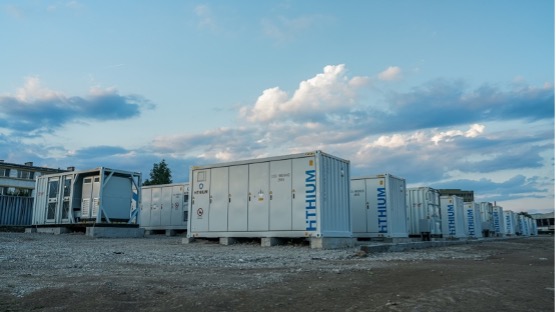
Utility‑scale energy storage systems rely on several lithium‑ion chemistries, each with distinct electrochemical characteristics that influence performance, safety, and cost.
Lithium Iron Phosphate (LFP): Dominant in new utility‑scale energy storage deployments due to high thermal stability, long cycle life (>6,000 cycles), and strong safety profile, even under prolonged stress—making it ideal for megawatt‑hour installations where reliability outweighs compactness.
Nickel‑Manganese‑Cobalt (NMC): Offers higher energy density than LFP, which reduces footprint per kilowatt‑hour of utility‑scale energy storage, though typically at higher material cost and with moderate thermal considerations.
Lithium Titanate (LTO): Less common but notable for very fast charge/discharge and extended cycle life, suitable for grid applications requiring frequent rapid cycling despite lower energy density.
These chemistries trade off energy density, cycle life, and cost. And the choice of the battery cell directly affects the capacity, durability, and economics of utility‑scale energy storage installations.
A utility‑scale battery energy storage system integrates multiple technical layers:
Battery Modules & Racks: Individual lithium‑ion cells are grouped into modules and racks to achieve the desired power and energy capacity of utility‑scale energy storage plants, often containerized for modular scalability.
Battery Management System (BMS) & Energy Management System (EMS): The BMS monitors cell voltage, temperature, and state of charge to protect against imbalance and thermal excursions, while the EMS optimizes charging/discharging strategies based on grid conditions and economic signals.
Power Conversion System (PCS): A bi‑directional converter that transitions DC energy from battery modules into grid‑synchronized AC power—and vice versa during charging—while managing power quality and supporting grid services.
Balance of Plant (BOP): Encompasses thermal management (cooling/heating), fire suppression, transformers, switchgear, protective relays, and auxiliary controls that enable safe, compliant, and resilient integration with the broader electrical grid.
These subsystems form a sophisticated, scalable utility‑scale energy storage architecture capable of supporting renewable integration, frequency regulation, and peak demand management.
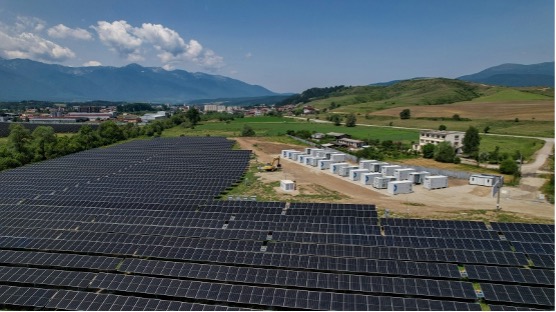
One of the clearest drivers of lithium‑ion adoption in utility‑scale energy storage is the dramatic decline in battery costs over the past decade. Average lithium‑ion battery pack prices dropped from roughly $1,400 per kWh in a decade ago, to around $115 per kWh by 2024, driven by manufacturing scale, competitive supply chains, and material innovation—particularly the shift toward cost‑effective LFP chemistries. Analysts project continued cost reductions into the late 2020s and beyond as both cell and Balance of System (BOS) costs decrease, making utility‑scale energy storage increasingly cost‑competitive with conventional generation.
Lithium‑ion utility‑scale battery systems typically achieve round‑trip efficiencies around 85% or higher, meaning a large portion of stored energy is retrieved for use with minimal losses. This high efficiency, combined with fast electronic response times (milliseconds), enables these systems to provide critical grid services such as frequency regulation, voltage support, and rapid dispatch for peak shaving.
Utility‑scale energy storage is inherently modular: individual battery modules and containerized systems can be aggregated to build installations from tens of megawatts to gigawatt‑scale. This scalability allows developers to tailor capacity to project needs and expand incrementally as demand grows, lowering upfront risk while optimizing site utilization.
The growth of utility‑scale energy storage is not driven by technology alone—robust market frameworks and targeted public policy play a defining role in shaping deployment economics and investment certainty. In major markets such as the United States, legislative incentives have fundamentally altered the business case for large battery projects.
The Inflation Reduction Act (IRA) introduced standalone energy storage Investment Tax Credit (ITC) provisions that offer a 30% base tax credit, with potential bonuses for meeting domestic content and wage standards, extending eligibility through 2032. These incentives have spurred record battery deployments and galvanized developers to lock in projects that previously might have been marginal on financial returns.
Internationally, governments in the EU, China, and parts of Asia have established national strategies, auctions, and grid codes that reward storage capacity and renewable integration. Policies aimed at modernizing wholesale markets and allowing storage to compete on equal footing with conventional generators are expanding the addressable market for utility‑scale projects, driving continued adoption of lithium‑ion technologies worldwide.
As the economics and performance advantages of utility‑scale energy solutions become increasingly compelling, lithium‑ion batteries have rapidly expanded their footprint on power grids worldwide. Yet even with these market and technology drivers accelerating deployment, several technical and operational challenges remain before lithium‑ion systems can fully meet the demands of a decarbonized power system.
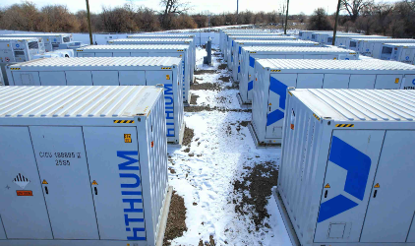
Lithium‑ion production relies on critical minerals such as lithium, cobalt, and nickel, whose extraction and processing are concentrated in a few countries. This concentration creates exposure to commodity price volatility and geopolitical risk that can affect costs and project timelines.
Lithium‑ion batteries in utility‑scale energy storage are effective for short‑term balancing—typically providing 1–4 hours of dispatchable capacity—but they are not designed for multi‑day or seasonal energy shifting. That constraint limits their ability to fully back up renewable generation during extended lulls in solar or wind output.
Over repeated cycles, lithium‑ion battery storage gradually loses storage capacity due to chemical wear. This degradation impacts long‑term performance and can necessitate earlier replacement or additional capacity to meet original storage targets, increasing lifecycle costs.
Large lithium‑ion installations carry inherent safety risks; thermal runaway events can lead to overheating and fires if not properly managed with robust controls and fire mitigation systems. High‑profile incidents reinforce the importance of strict safety design, monitoring, and standards.
While lithium‑ion technology remains the backbone of utility‑scale energy storage, some limitations—such as short‑duration constraints, degradation, safety concerns, and supply pressures—continue to shape project design and long‑term economics.
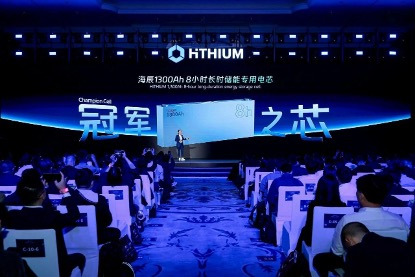
At HiTHIUM, we have developed integrated solutions that directly tackle these challenges, enhancing performance, duration, and safety for large‑scale renewables integration. Our latest innovations, the ∞Power8 6.9 MW / 55.2 MWh solution and ∞Cell 1300Ah 8h battery cell, are focused exclusively on overcoming the challenges of utility‑scale BESS industry.
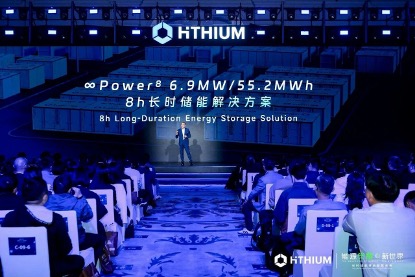
As mentioned, a core limitation of conventional lithium‑ion BESS has been short‑duration discharge. HiTHIUM’s ∞Power8 6.9 MW / 55.2 MWh system is purpose‑built as a native 8‑hour long‑duration energy storage (LDES) platform, extending usable storage duration without resorting to oversized arrays of short‑duration cells. Its architecture—from cell to system—improves integration, increases overall efficiency, and reduces redundant components for lower lifecycle degradation and lower system costs.
By using highly integrated modules and an optimized medium‑voltage configuration, ∞Power8 also reduces construction intensity and land use compared with previous generation systems. This design improves reliability and effectively lengthens operational life by requiring fewer parallel cell groups, a structural benefit that mitigates cumulative degradation effects typical in large lithium‑ion installations.
At the heart of this long‑duration system is the ∞Cell 1300Ah 8h, a high‑capacity lithium‑ion cell engineered to directly confront multiple utility‑scale challenges:
Longer Cycle Life & Reduced Degradation: With more than four times the capacity of mainstream cells and proprietary ultra‑thick electrode technology, the 1300Ah cell supports extended 8‑hour operation while reducing the number of discrete cells needed—thereby lowering cumulative wear and extending service life.
Safety & Thermal Stability: HiTHIUM has incorporated multilayer protective materials and system safeguards that enable the ∞Cell 1300Ah to pass stringent safety testing with non‑propagating thermal runaway resistance, addressing key safety risk concerns in utility‑scale deployments.
Material & Supply Optimization: By increasing electrode thickness and reducing auxiliary component needs, the cell lowers dependency on certain materials (like copper and foil) and lessens overall component cost, helping alleviate some pressure from raw material and supply chain dependencies.
Reliability & Long-Term Robust: Designed for 25‑plus years of operation, the ∞Cell 1300Ah 8h enhances the long‑term return on investment for utility‑scale projects while addressing degradation, safety, and materials concerns more robustly than standard lithium‑ion cells.
Lithium‑ion technology has become the backbone of utility‑scale energy storage, enabling cost‑effective renewable integration, high efficiency, and critical grid services. Despite challenges such as short‑duration limits, degradation, safety risks, and supply dependencies, innovations like HiTHIUM’s ∞Power8 6.9 MW / 55.2 MWh and ∞Cell 1300Ah 8h demonstrate how engineering advances can extend discharge duration, enhance safety, and improve lifecycle performance.
As utilities and grid operators continue to decarbonize, HiTHIUM’s solutions help unlock the full potential of renewable‑rich power systems, driving greater reliability, flexibility, and sustainability across modern electricity networks.
For more information, please contact us directly!




 Previous: